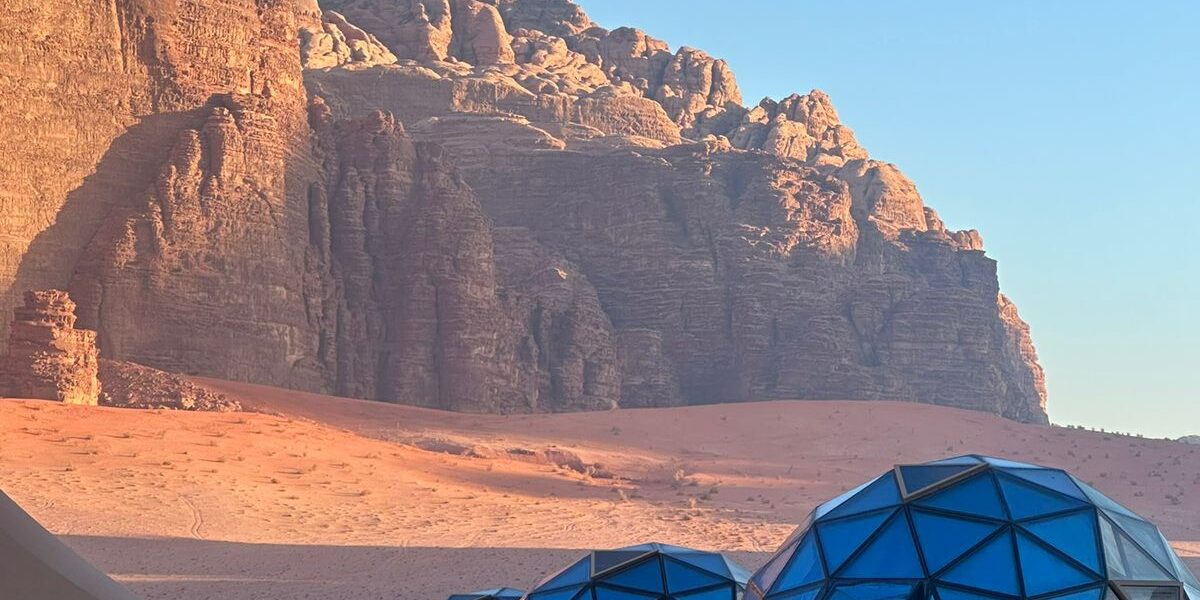
We made our share of small mistakes on our first trip to Jordan. None were dealbreakers, but each one cost us either time, money, or comfort — and most could have been avoided with a single sentence of advice from someone who’d been before. Start from the Jordan planning hub for the full series. If you want the trip context first, read how we planned the route from Cyprus; for what we paid, see the Jordan cost breakdown. Here are the fixes we wish we’d had upfront.
1. Underestimating How Cold Wadi Rum Gets at Night
We packed for “the desert” in our heads — light layers, sandals, a single hoodie. When the sun dropped at Wadi Rum, the temperature dropped with it. We sat by the campfire shivering inside everything we’d packed.
Fix: Pack a proper insulating layer (fleece or down jacket), a warm hat, and closed shoes even if you’re going in spring or autumn. The desert swings 20–25°C between day and night. The camp will provide blankets, but you’ll thank yourself for the jacket.
2. Buying Petra Tickets Separately Instead of the Jordan Pass
If you arrive in Jordan without the Jordan Pass and pay for Petra on the day, you’ll pay both the entry fee and a separate Jordan visa fee on top. We almost did this. The Jordan Pass bundles your visa with multi-day Petra access for a flat ~$99 — you save real money.
Fix: Buy the Jordan Pass online before you fly. You must stay 3+ nights in Jordan for the visa fee to be waived, which most short itineraries already do. Print the QR code or save it offline — airport Wi-Fi can be patchy.
3. Trying to Squeeze Petra and Wadi Rum Into the Same Day
One of the itineraries we looked at tried to combine a Petra half-day with an afternoon arrival at Wadi Rum. On paper it sounds efficient. In reality, you’ll rush through Petra (which deserves a full day at minimum), arrive at the desert exhausted, and miss the slow build-up that makes Wadi Rum special.
Fix: Give Petra a full day. Give Wadi Rum a full day plus a night. If your trip is too short to do both properly, pick one and do it well. The whole point of going was the experience, not the photo count.
4. Skipping the Airport SIM Card
We thought we’d just use hotel Wi-Fi. The result: no offline maps in Amman traffic, no way to message a driver who was 10 minutes late, no real-time taxi pricing. We caved and bought a SIM on day three — should’ve done it at the airport.
Fix: Buy a Zain or Orange tourist SIM at Queen Alia airport. It’s ~$15 for 5–7 GB and works everywhere we went, including Wadi Rum. Both kiosks open early and stay open late.
5. Booking Too Few Nights
We started this trip thinking 4 nights would be plenty. It wasn’t. By the time we finished Petra and arrived at Wadi Rum, the trip already felt like it was ending. The Dead Sea got the time it deserved only because we extended on the fly.
Fix: Plan for 5–6 nights minimum if you want to see Petra, Wadi Rum, and the Dead Sea without rushing. Six is the sweet spot: 1 Amman + 2 Petra/Wadi Rum + 2 Dead Sea + 1 buffer night for travel time.
A Few Smaller Things
- Agree taxi fares before getting in. Many cabs in Amman don’t use meters — settle the price at the door, not at the destination. See who to trust when booking Jordan for how we score operators.
- Bring extra water on desert days. What feels like “enough” in your hotel room is half of what you’ll drink at Wadi Rum or Petra.
- Dress modestly at sites. Shoulders covered, knees covered — especially at Petra and downtown Amman. It’s about respect, not just rules.
- ATM fees stack up. Pull larger amounts less often; each withdrawal carries a fixed fee, regardless of size.
- Pack flip-flops for the Dead Sea. The shore is sharp salt and rock. Hotel slippers will not survive it.
If you found this useful, the full Jordan story covers why we made the trip and how we planned it, the cost breakdown shows exactly what we paid, and who to trust when booking scores the platforms and operators we actually used.